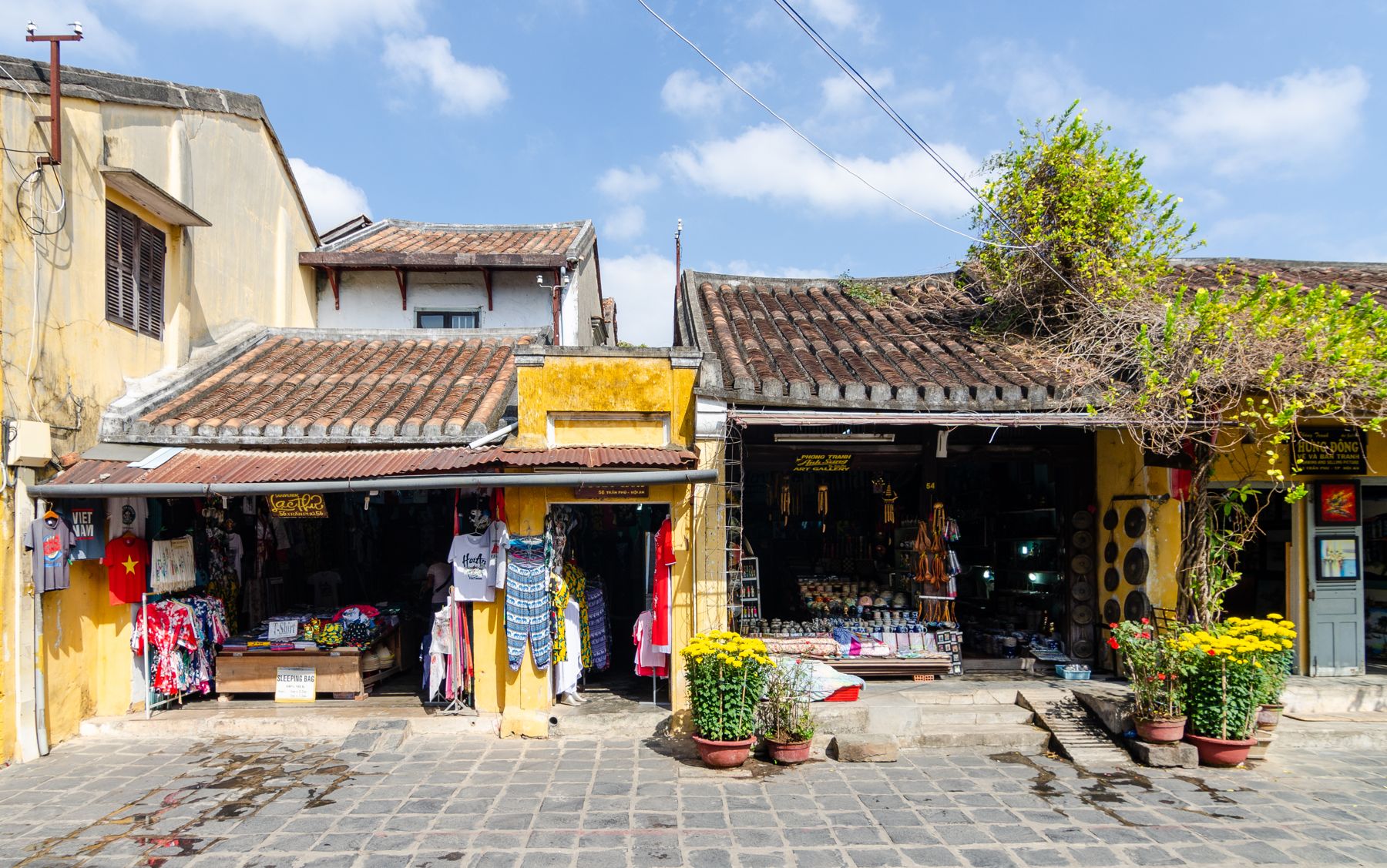
Hoi An sits near the mouth of the Thu Bon River on Vietnam's central coast, a short drive south of Da Nang. For a few centuries it was one of the busiest ports in Southeast Asia, where merchants from China, Japan and later Europe traded silk, porcelain, spices and lacquer. When the river silted up and larger ships moved to Da Nang, the town was left largely as it was. That accident is why its old quarter of low merchant houses, assembly halls and narrow lanes survives, and why it is a World Heritage site today.
It is also one of the easiest places on the road through Vietnam to write. The old town is compact and mostly closed to cars, so you can walk it end to end in half an hour and sit down almost anywhere.
The old town in the morning
Hoi An is busy from late morning to late evening, and quiet at dawn. If you only change one habit here, make it getting up early. Between first light and about eight, the lanes belong to people sweeping doorsteps, carrying produce to the market by the river and cycling to work. The yellow walls of the merchant houses take the low sun well, and you can stand in the middle of a street long enough to copy down the shape of a roofline or the words on a lacquered sign.
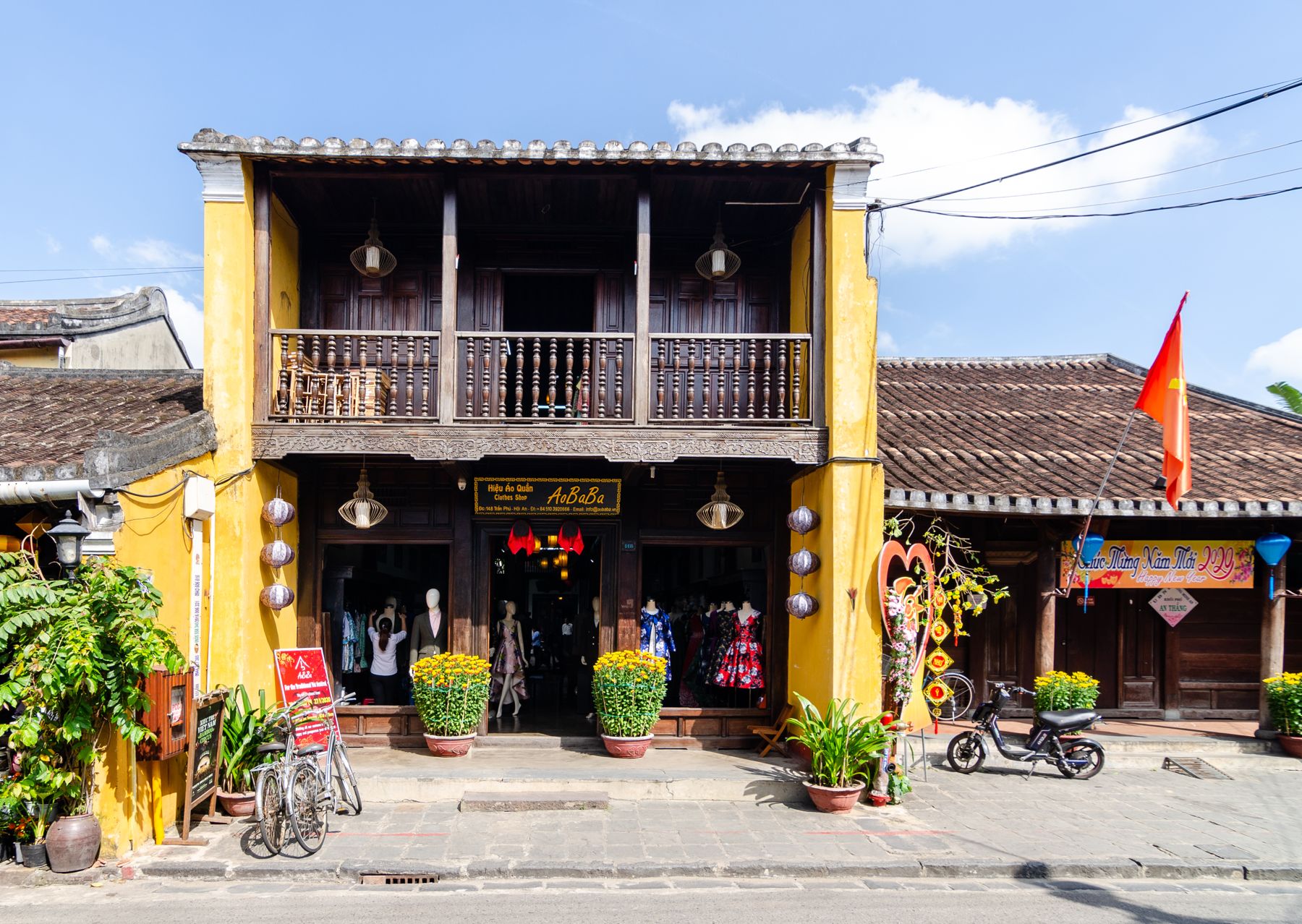
Many of the older houses are long and narrow, running back from the street towards the river, with a shop at the front and living rooms behind. Several are open to visitors, along with Chinese assembly halls built by merchant communities from different provinces.
The Japanese Covered Bridge
The small roofed bridge at the western end of the old town is Hoi An's best-known landmark. It is traditionally linked to the Japanese merchant community of the late sixteenth or early seventeenth century, and a small temple is built into one side. It has been repaired many times, most recently in a long restoration finished in 2024.
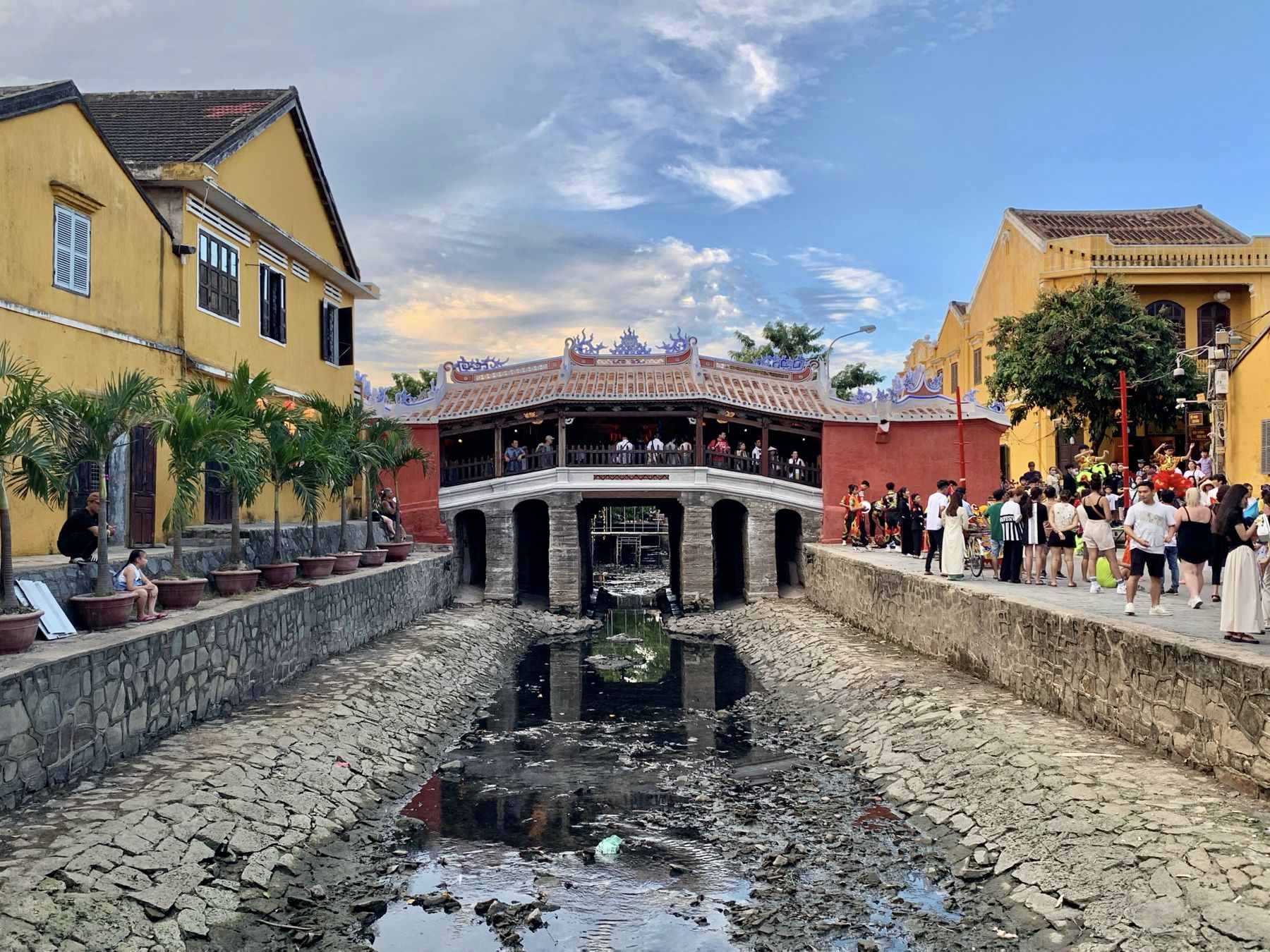
The bridge is short, and most people cross it in under a minute. For a notebook it rewards a longer look from the lane on either side: the roof tiles, the carved figures at each end, the way people pause in the middle to look down at the water.
Lanterns, dusk and the river
In the evening, silk lanterns are lit along the lanes and over the water, and small boats take people out onto the Thu Bon to float paper candles. It is crowded and it is lovely. A good approach is to cross to the far bank, An Hoi, and watch the old town light up from there, or to walk a few minutes east or west along the river away from the busiest stretch.
On some nights around the full moon the town has traditionally turned down electric lights in favour of lanterns. Whether and how that happens varies.
Floods and the wet season
Hoi An floods. In the wet months, mainly from about October to December, the Thu Bon can rise into the streets of the old town, sometimes for days. Look at the walls and doorframes of the older houses and you will often see marks showing how high past floods reached. They are a small, sobering detail worth writing down.
The driest and most comfortable months for walking are usually from about February to April. Summer is hot and bright. The notebook page has advice on keeping paper dry, which is worth reading before a trip in the wet season.
From Hoi An, most travellers continue south to Ho Chi Minh City, by air from Da Nang or overland. Hoi An is a good place to read your notebook through before the noise of the south.
The other pages
Photographers and licences: picture owners.